.png)
Parquet Patterns
The parquet pattern takes its form from classic Dutch parquet flooring, where one or two tiles laid crosswise form blocks that alternate direction. In granite ceramic, this time-honored look takes on a durable and low-maintenance character. The alternating sections create a calm, rhythmic interplay that feels both timeless and comfortable to live with. The pattern works best in smaller, narrower formats, but also works well in larger rectangular tiles for those who prefer a more generous scale. The image shows Limestone Select Classic.
.png)
Staggered pattern
The staggered pattern has its origins in the traditional method of laying staggered lengths of wood and stone, and gives the floor an organic, almost handcrafted feel. The joints are offset irregularly so that no distinct grid pattern emerges—instead, a natural flow is created across the surface. This laying pattern works particularly well with elongated formats such as 20x60 or 30x60, where the length of the tile reinforces the direction of the room. The image shows Kolmården.
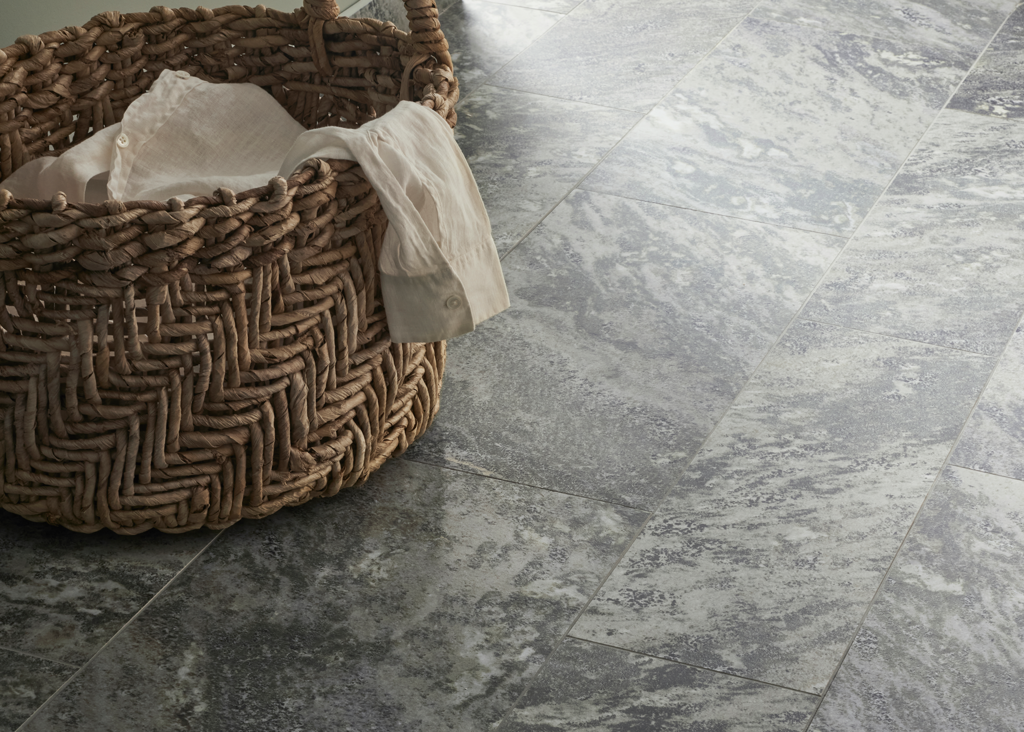
The row pattern
The row pattern is based on two rectangular formats laid out in straight, fluid rows. The difference in width between the formats creates a subtle yet distinct rhythm without feeling intrusive. With a matte and honed surface texture, respectively, the installation takes on an architectural and serene look that works equally well on floors and walls. Choose a unified color for a cohesive look, or let the different surface textures contrast with one another. The image shows Limestone Select Classic Honed & Matt.
.png)
The piano pattern
The piano pattern combines a square tile with a narrow rectangular tile, giving each section a clearly defined edge and a clean, graphic look. Here, two materials come together in a combination that allows them to interact and enhances the pattern’s contrasts. By offsetting the modules by varying degrees, the layout can be varied into a half-bond, stair-step, or zigzag pattern—but the pattern also looks great when laid tone-on-tone for a calmer look. The image shows Glanshammar Classic & Kolmården.
.png)
Combined Sizes
Combining multiple tile sizes within the same series is all about modularity—allowing different formats to interact within the same surface without compromising the precision of the joints. Because the series is calibrated to exact dimensions, the tiles can be freely mixed in terms of size and orientation, while maintaining a cohesive overall look. The result is a surface with more movement and character than a layout using a single format, without compromising the clean, serene feel of the material. The image shows Limestone Select Classic Honed.
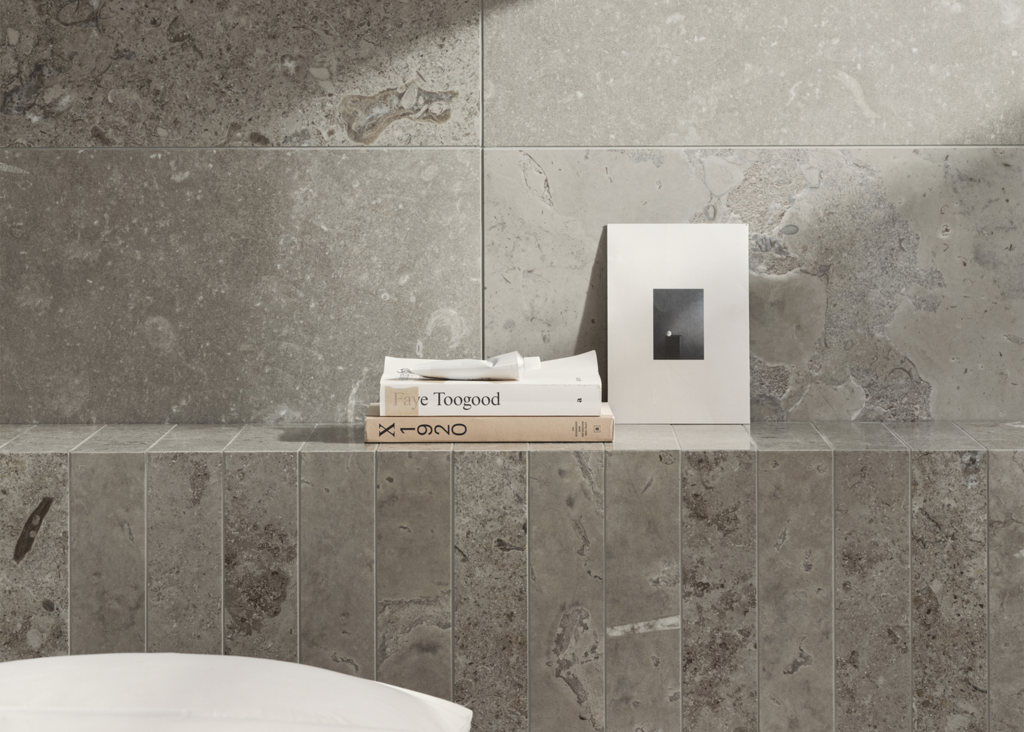
Windmill Pattern
The windmill pattern is a playful modular design in which four narrow tiles frame a square tile in the center, creating a distinct sense of movement around the center. The contrast between light and dark gives the pattern extra impact, with the smaller square serving as an accent within the surface. This layout works just as well as a serene tone-on-tone composition, but here it is allowed to showcase its full energy and graphic distinctiveness. The image shows Glanshammar White & Dark.
.png)
Tripptrapp
Tripptrapp is based on two different tile formats that interlock to create a stepped pattern across the surface. The larger tiles provide a sense of calm and stability, while the smaller ones—ideally in a different color—serve as clear markers between the sections.
.png)
Staggered Pattern
Just like in the staggered layout, this pattern is based on irregularly offset joints, giving the surface a natural and dynamic flow without distinct squares. In the light, clean design, the movement becomes especially clear and gives the room a soft, organic character. The pattern works particularly well with elongated formats, where the orientation of the tiles enhances the sense of natural offset across the entire surface. The image shows Limestone Select Classic.
.png)
Herringbone
Herringbone is essentially a classic parquet pattern that is given new life in granite-effect ceramic tiles. The narrow tiles are laid at right angles to one another, giving the surface an artisanal, vibrant look that feels both warm and timeless. In this image, the pattern is presented in a light, limestone-inspired finish that enhances the feeling of natural materials. A single color lets the pattern take center stage, while multiple shades can add contrast and personality. The image shows Norrvange Ivory.
.jpeg)

.png)